Beware your confirmation bias

I’ve said it before and I’ll say it again. I love data.

I love data, I love data analysis and I love evidence. Maybe not as much as Rob Briner, but that’s a tall order – we can’t all be that weird.

I hate assumption.

I worry that in the HR profession we’re increasingly happy to throw relevant information to one side and follow arguments that we personally value, even when the data suggests to the contrary. I’m especially worried that the whole “Human focussed HR” is being used as a cover all for sloppy, stupid thinking.

Two conversation happened last week that made me reflect on this in more detail. Now, the conversations in themselves weren’t stupid and the proponents were well meaning, but the arguments being made exemplified this risk.

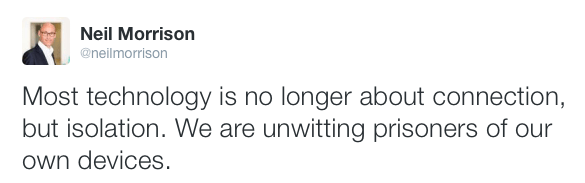
I tweeted this:
Screen Shot 2016-05-28 at 11.52.59

I’m increasingly interested in the psychology of technology and the way in which our behaviour is manipulated by technology companies. It isn’t new, retailers have been using behavioural manipulation for years, but it is naive of us to assume that technology is purely about liberation. We are given the sense of being super connected, when in fact we are depriving ourselves of many other types of social contact and integration. You can look at the research on this and there is an increasing body that shows the potential dangers.

A number of people responded to me that this wasn’t the case, that I was talking rubbish and that in fact we were all more connected than ever. I asked for evidence, I got none. I asked for data, I got none. We are more connected, we just can’t prove it.

Then I saw this,

CjeuoC7UkAAk_FA.jpg-largeCjZ0Mk7VAAIYsAe.jpg-large

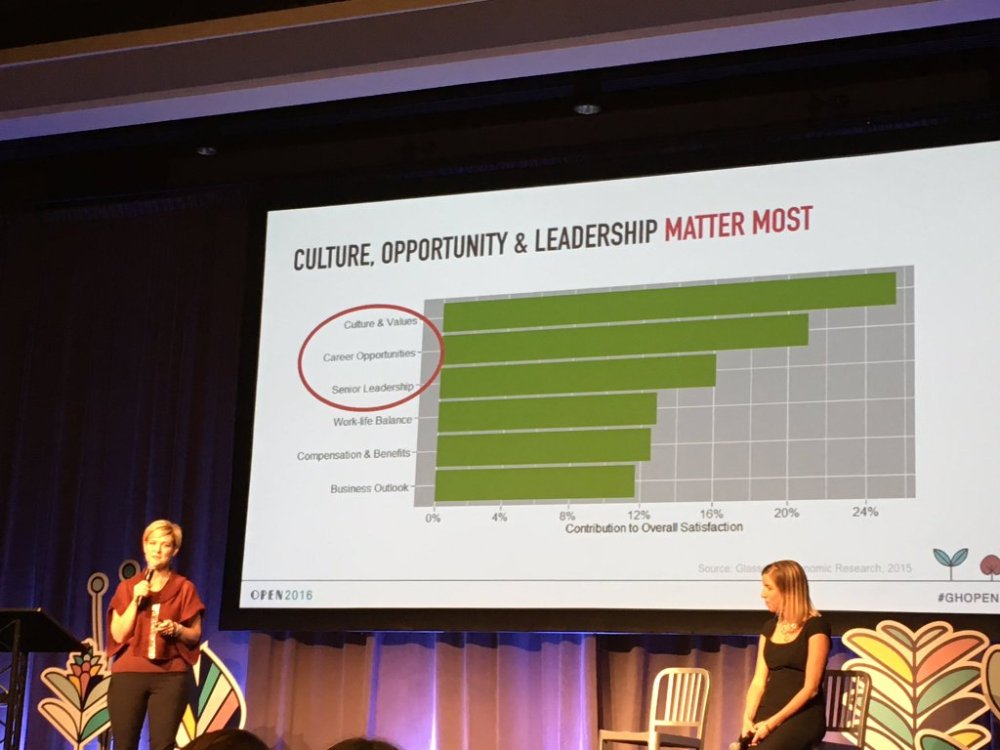
Both of these were being used to argue that compensation was really unimportant when compared to culture. It’s an argument that I hear a lot, it isn’t the money, it’s the culture. Ok.

But let’s reposition that data.

“Work life balance is unimportant compared to the senior leadership of an organisation”

Because, the data also suggests that. I’m not sure I hear many proponents of this argument in the world of HR. I don’t hear people arguing that no-one cares about work life balance as long as you’ve got top quality (well paid?) senior management.

The point is this. We need to be careful of our confirmation bias, we need to be careful of seeing the information we believe in and not the information as a whole. The arguments are rarely simple, they’re complex. They’re rarely linear, they’re multi faceted. And we need to be able to explore complexity and make appropriate conclusions based on evidence.

I believe in a more human workplace, I believe in making things better for employees and employers, for society. We will only do that by approaching this in a scientific, detailed and thought through way. Not by making bland assertions based on our gut instinct and personal beliefs.

If we want this, the evidence is there, we just need to be thoughtful enough to discuss all of it – even the bits we don’t agree with.

Is this liberation?

My daughter told me this week about a conversation with one of her friends. The subject was whether it was possible to complete your homework without access to the internet. Before we all start to roll our eyes and talk about generations, it was a thoughtful conversation about whether the sources of data that were available to them offline would be sufficient versus the wealth of data available online.

I’ve been known to say that my children think they know everything, because they have Google. The smartphone and the search capability provide them with a surrogate brain and borrowed knowledge. Maybe there is something wrong with that, maybe there isn’t.

What I do question, is whether we are effectively outsourcing our decision making capability to technology and therefore losing the skills and experience to help us effectively and quickly work things out.

When I worked in a bar as a student, the landlord refused to have an electronic till. Instead we had one of the old push button ones with a cash drawer that pinged open with delight and the very real risk of losing a kidney. As a student of economics and accounting at the time, my maths was never stronger than when I was running mental totals of drinks orders for customers who would invariably use it as a chance to question your answer.

In the modern workplace, we rarely calculate anything ourselves. Walk around the streets of any town or city and you’ll see people looking at their phones to show them the direction. We are more likely to look at an app, than out of the window, to know the weather.

In some ways, if we’re using the liberation from the mundane to focus our minds on higher matter, the more complicated and meaningful topics, then you have to argue that this is a huge step forward. If the systemisation of the transactional allows us to learn, to be curious and thoughtful; to read, to think, to share, to talk and grow.

But if we are being led down the path of unconscious disempowerment and the destruction of creativity, problem solving and reduction of our innate ability to guesstimate, approximate and divine, then we need to think again.

If our liberation merely allows us the ability to take photos of our food and share them with people we have never met, to find out where we need to be, without knowing where we are, to be given an answer, without understanding the question. If our liberation does nothing more than reduce the sum of our parts, we have to question whether that is liberation at all. When we are beholden on something or someone else to allow us to fulfil our lives, we are more likely to find ourselves trapped, rather than free.

Angry white males

The angry white male is everywhere.

They’re on the forum where you posted that innocuous comment.
They’re in the meeting where you can’t get airtime.
They’re in the queue telling everyone else how to stand.
They’re in the hotel lobby making sure they know “who they are”.
They’re even writing this blog.

The angry white male is everything that holds us back from our potential, they sit on our shoulder with the threat of, at any point, pointing out their superiority and our inadequacies. They lurk on social channels expressing their views and goading you to reveal the smallest part of yourself that they can then judge.

The angry white male is the reason we don’t debate and discuss the things that we need to. They are the reason that curious inquisition is met with an indignant retort. They stand as the single business reason for the curtailment of creativity and innovation.

The angry white male stands between you and your best self, from your potential. They want to hold you back to remain in “front”, to keep you down, so they can stay “above”. To keep things “in order”, their order.

But the thing about angry white males is, you don’t beat them by trying to be more like them. You beat them by ignoring them, by marginalizing them, by going on regardless. You beat them by remaining true to yourself, to your thoughts, to your beliefs and to your dreams.

Nobody creates the rules, other than you. No-one decides what is acceptable, other than you. Nobody has the right to judge your idea as good or bad or to determine how you should or shouldn’t present your thoughts and feelings. No-one has that power.

The angry white male lives inside all of us, to a greater or lesser extent. They come out when we hinder rather than help, when we tell rather than ask, when we judge rather than consider.

The angry white male is everywhere.

But they needn’t be.

You can’t systemise creativity

I saw a quote last week that appealed to me. John Sumser from the excellent HR Examiner was reporting what must be the overheard line of the week,

“…if we knew what we were doing, this wouldn’t be cutting edge….”

It made me smile because within one short sentence you have a pretty good summing up of the entire creativity/innovation/experimentation experience.  It is a little bit messy and often uncertain. It can feel directionless, purposeless and baffling to others around.

It also reminded me of a personal experience years ago when I was presenting to a board on a new initiative that I believed would be both ground breaking and commercially beneficial to the company. Finishing my presentation full of youthful exuberance and positivity, I was met with a simple question, “what are our competitors doing?”

Sadly, the reason for asking wasn’t to seek competitive advantage, but as means to explain that if no-one else was doing it, it probably wasn’t worthwhile and my answer that, “shouldn’t we want them to be asking that of us?” fell on deaf ears.

An therein lies the problem with innovation and creativity in many organisations. We value certainty, data, facts and benchmarking, yet we talk about innovation, entrepreneurialism and creativity. One is solid, robust, measured and definite. The other can often feel like the crazy.

Creating organisational cultures that allow genuine experimentation and innovation is hard. We are drawn to put boundaries around it and to try to “organise” it or “systemise” it, because that is or comfort zone. Despite implicitly knowing that these are the kryptonite to the very things we want to encourage.

If we want to go to places that no-one else has been, then by definition we will never be entirely certain of the outcome. We can have hypotheses, we can test and measure those, but we need to live with a level of uncertainty and ambiguity.

My worry, is that in a world where we are increasingly looking at data to define every decision, we forget that sometimes you need to combine insight and intuition. That there needs to be a place for creative thinking, brave decision-making and seemingly impossible futures.

It is absolutely right to measure the problem, but sometimes we need to dream the solution.