Don’t bring your whole self to work

I’ve always taken issue with the idea of “bringing your whole self to work”. It’s a pretty meaningless statement that is normally espoused by the kind of sugar addicted character who will also bounce into a room and start a sentence with, “I know this is probably TMO, but..”

The first reason I dislike it is the base logic, or more the lack of it. There are many things that people do in their lives that would be highly inappropriate to share with most other people, never mind in the workplace. The second reason I dislike it is that it takes the kind of “radical candour” approach that many feel uncomfortable and suggests that if you don’t comply, then somehow you’re repressed or restricted rather than making a perfectly reasonable choice to keep things to yourself. If I don’t want to bring my whole self to work, then that should be entirely my choice and totally acceptable to others.

But over the last few weeks, I’ve been reflecting on some of the debates that we’ve seen about organisational behaviour and the stances taken on social issues and I’m starting to see a much more problematic issue with this approach. Some organisations are increasingly moving away from employment policies and are straying into social policy, and I’m not sure that’s a good thing.

Our job should be to create safe and inclusive workplaces, where people can come and perform their work without fear or intimidation and go home at the end of the day to their private lives. We should be creating environments that aim to reduce and remove discrimination, we should make sure that our workplaces are legally compliant and we should foster respect and understanding. But I wonder if making bold stances on our positions on social issues serves us, our employees and society well.

As we increasingly see “culture wars” break out on a whole range of topics, is the workplace somewhere that should provide a safe space away from them? A place where active positions intentionally aren’t taken, but that acceptance of all is a requirement. The alternative seems to me to be that we either risk alienating employees through stances that they don’t agree with but feel unable to challenge, or we engineer our organisations so that they only accept people with certain social views and beliefs.

Ultimately this means working alongside people who might have completely different views and beliefs to us, that will hold opinions that we do not agree with and will challenge us and who will maybe do things in their lives that we find difficult to accept. But we recognise that at work we don’t bring these aspects with us, that they our part of our private lives and we respect the right of everyone to have a private life, which is entirely separate to how we behave at work. In a funny way, that could actually be more inclusive.
We create the culture (when) we hate

Social media isn’t what it once could have been. Perhaps it was always destined to be this way – factious, opinionated, angry and blaming. Perhaps it is just places a magnifying glass on the society that we are creating, that’s playing out in front of our very eyes. Perhaps it is a bellwether of something more deep rooted that’s going on around us every minute of every day.

James Marriot wrote a brilliant piece in The Times a few weeks about the importance, in some respects, of social conformity in ensuring thoughtfulness and meaningful discourse. The idea that simply through the presence of others, the expression of ideas is likely to be more thoughtful and we more considered in our views. And we’ve all heard the sage advice to write nothing that we wouldn’t say to someone in person.

But the social norming of social channels is entirely different to sitting in an office, a pub or in a debating chamber. Many years ago I wrote that the problem with the democratisation of the media was that it places a voice in the hands of the “dull, feckless and boring”. I’m not sure that is entirely fair, but it certainly creates a false sense of importance through audience and – at the extreme – a blue tick on Twitter suddenly gives a legitimacy that historically would only have been given by an organisation willing to pay for a view or opinion, or through a public mandate.

There is a clear argument to be made that this is a good thing. Remove the shackles of economic or political barriers to entry and open up the airwaves to anyone, let the most popular thrive. In the same way that I’ve spoken about the dangers of choice, popularism brings with it more downsides than it does up and fuels the increased polarisation that we see in so many situations. “It’s complicated” or “I can see both sides” wins fewer short term support than an over simplified, energised opinion.

Which is why one of the biggest game in town now is blame. Whatever the situation, the moment or issue, somebody has to be singled out and responsible for anything that we disagree with – and as publicly as possible. At the same time fuelling the division and the polarisation that is already spreading like a poison in our social and political discourse and pretty much every aspect of society.

Take the recent period of extreme hot weather (yes that’s a fact it was extreme) and immediately the social verse was full of opinions about how it “wasn’t really that hot” and that health experts were some how trying to dupe us, to spoil our fun. Alongside the extreme and ill formed opinions, “I went to Ibiza once and it was way hotter than this”, we get the misinformation both idle and intentional that then follows. (See the false weather map as an example). The powers that be couldn’t be considering the minimum mortality temperature or likely excess deaths, there was bound to be an ulterior motives. And we, through the power of our social presence, we’re going to point that out.

But of course, this isn’t about weather or temperature it is about how we, each and every one of us, contribute to the culture and the society that we live in. When we get likes or retweets by shouting our view point louder, when we feed the bravado of others by doing it back to them. When we are hurtful or spiteful or divisive. We spread hurt, spite and division much further than our original premise. Our actions facilitate the actions of others whether they agree with our view points or not – we are condoning a way of behaving. And that culture, those behaviours, the belief that there is someone always at fault spreads pervasively and causes misery throughout our communities and even into our workplaces.

Dignity, respect, curiosity and inclusion is built on acting dignified being respectful, remaining curious and seeking to include. It doesn’t happen because we wish it to be so, but only through the integrity of our actions.

We’re stuck inside our own debate (again)

When you think the biggest contribution you have to make to your organisation is a debate on how many days office workers should be in the office, you know you’ve failed as a profession. Sorry, I want to find a nicer way of saying that, but I just can’t.

This isn’t a new thing, just the latest of a long history of internally focused, self obsessed initiatives that have failed to add little value to organisations, society or the communities we serve. Remember when everything was about “disruption”? As I said at the time, nobody wants to be disrupted and the last two years have proved that to be the case. Can’t get on a plane for your holiday because there are no ground staff? Can’t get a train to get to work because of industrial action? Welcome to disruption.

And then of course we were going to blow up performance management and appraisals. Remember that? Because of course, the most existential challenge and issue your organisation faces right now is the number of performance categories you have and the best way to change behaviour is always to change the form…

When I wrote a ten point agenda for change four or five years ago it was more a cathartic reaction to another pointless news story about the profession that came about because of our singular ability to stand for anything other than the protection of our own working practices and self interest. And whilst I come across more and more HR professionals that “get it”, the majority of the profession is still well and truly sucked into it’s own navel.

The instinct of most in the face of criticism is to try to do stuff to be popular, but if our fundamental drive is to be liked we are destined to fail like anyone in a leadership position. One of the confusions we have about our political system is we think politicians are there to do what we want them to do, democracy is about listening to views and opinions not simply doing the thing that most people say they want. When you do that you become insular and so focused on the internal zeitgeist that you lose sight of the greater purpose – such is the case in many organisations too.

And that is where too many HR functions are right now, with not a single eye on the outside, the big macro changes in the economy, in society, that will provide challenges for our organisations tomorrow, next year and for many years to come. Those are the debates we should be raising with our executive teams and boards, those are the things that demonstrate our true value as a profession, those are the things that will fundamentally make a difference to the long term organisational success.

I saw a stat this weekend that really shook me. In the UK, only 59% of the adult population have incomes high enough to pay tax. Ask yourself a question. What is your organisation doing to tackle that?

The P&O scandal shines a light on our privileged view of work

Like many, I was pretty gobsmacked by the brazen approach of the P&O CEO Peter Hebblethwaite in addressing a parliamentary select committee last week. If you’re unaware of the story, it broke a couple of weeks ago when P&O effectively fired a quarter of their workforce with immediate effect via video. And, unsurprisingly, there was widespread outrage from politicians, the media, trade unions and employer groups. Rightly so, these were acts that even if the law was taken out of consideration were highly immoral and unethical.

But the fact these made headlines, these are just the actions of a rogue organisation, right? Sadly not.

Before I go on to make my main point, I want to stop for a second and clarify something that I think is important to the context of the argument. There is an intellectual difference between believing something is wrong or right and believing it is the principal argument that needs to be had, right here and right now. In a world full of opinions, but limited space and time, our job as leaders is to curate all of those multiple points and focus on the ones that matter the most, for our teams, for our organisations and, for society. The ones that matter to the majority.

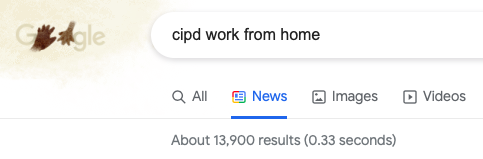
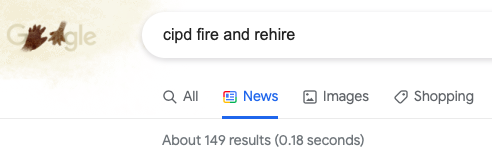
Unfortunately, when it comes to the world of work and creating a sustainable future we fail to do this. That’s why you’ll find the last twelve months littered with articles and opinion pieces about flexible working, working from home, remote working, hybrid working, the four day week and more and why you’ll find little on the increasing practice of fire and rehire.

What is beneath this? Well the first set of issues relate predominantly to white collar, professional workers and the latter to blue collar skilled or manual workers. It is simple as that. And yet the latter group make up a much more significant proportion of the workforce. So as leaders and HR professionals we focus on the things that matter to us personally, and the journalists write about the ones that matter too them. Curiously there is a significant overlap.

I’ve spoken before about my concerns about restructuring work without thinking about the majority of workers and the communities that they live in and I stand by these concerns because they are very real and pressing. But that doesn’t mean that I don’t believe in progress in the workplace or moving towards a different more flexible future, I just don’t think it is the most pressing issue that we face in our societies and in our workplaces, right here and right now.

If the P&O situation tells us anything, it is that for many of us our view of work is shaped by a privilege afforded by position. These practices have existed for years (Irish Ferries did something incredibly similar in 2005) and they’re going on in organisations today. And of course, this is just one of the unfairnesses that exists in work. If we believe in creating a future that is better, that is supportive of all and that creates the kind of organisations that we would be proud that our grandchildren work in, we would be better starting there rather than feathering our own, already comfortable nests.