Thirty years of HR-t

A letter came through the door last week with a certificate from the CIPD marking 30 years since I first joined. Alongside inclusion in the HR’s Most Influential Hall of Fame, this was clear proof that I’m now old…a “veteran” as I’ve been described. Ouch.

Over the 30 years, I’ve never once hesitated paying my membership fees, because I value the work that the CIPD does. I know that might sound strange to some people who would expect me to criticise them (more of that later) but I genuinely believe they do an important job in a difficult context where it is hard to please everyone and sometimes even anyone. Like any long standing relationship, you have ups and downs. You tolerate things that used to irritate you and you get irritated by things you used to tolerate. But good relationships are based on honesty, constructive challenge and always wanting the other party to be better for themselves, not for you.

So let’s start with the good stuff. When I qualified the IPD had just been formed through the combination of the Institute of Personnel Management and the Institute of Training and Development. I became a GradIPD and I was genuinely proud, even more so in 2003 when that became the CIPD. Professional standards are important, particularly in a profession without the mainstream understanding of the law or accountancy for example. To this day, we put people through their CIPD qualifications in my organisation and it matters to them like it did to me. That chartered membership is a standard that should be championed and cherished in making the profession known and widely recognised.

Whilst the CIPD is at its best when it is championing high standards, it is at its worst when it starts to stray into social policy. The partnership with the High Pay Centre to champion “Fat Cat Monday” was frankly bonkers given the, at the time, very outspoken leadership of the HPC and something that anyone with half a brain should have understood placed its members in untenable positions with their remuneration committees. They’ve got themselves in a high profile mess over trans rights too, and their bias towards knowledge workers rather than the front line blue collar workers stems from a like of social, economic and intellectual diversity in their ranks. They have super bright people in the organisation, but I sometimes wonder whether there is a bit too much group think and a bit too little sense of strategic direction.

Over those thirty years we’ve had some fun too. Who can forget the imbecilic “Think HR, Think Again” marketing campaign. There was more “thought” in the strap line than there was in the conception of the ridiculous short lived campaign. There was the time in the early days of social media where they struggled a to get to grips with hashtags being used to drive feeds, leaving a few of us to swamp their website with irrelevant humorous content and being eventually given a stern dressing down by their social media team. And of course, the pièce de résistance when I managed to put a rather inappropriate message on the large screens at the 2014 People Management Awards (image below).

So 30 years in, CIPD it has been a blast. Keep championing better work, keep making people proud to qualify, remember our job is to drive the productivity of individuals, teams and organisations and not to tell people how to think or what to believe. And please, for the love of Buddha, don’t do another marketing campaign like that one. Here’s to…well not another 30 years, but who knows…maybe another 10.
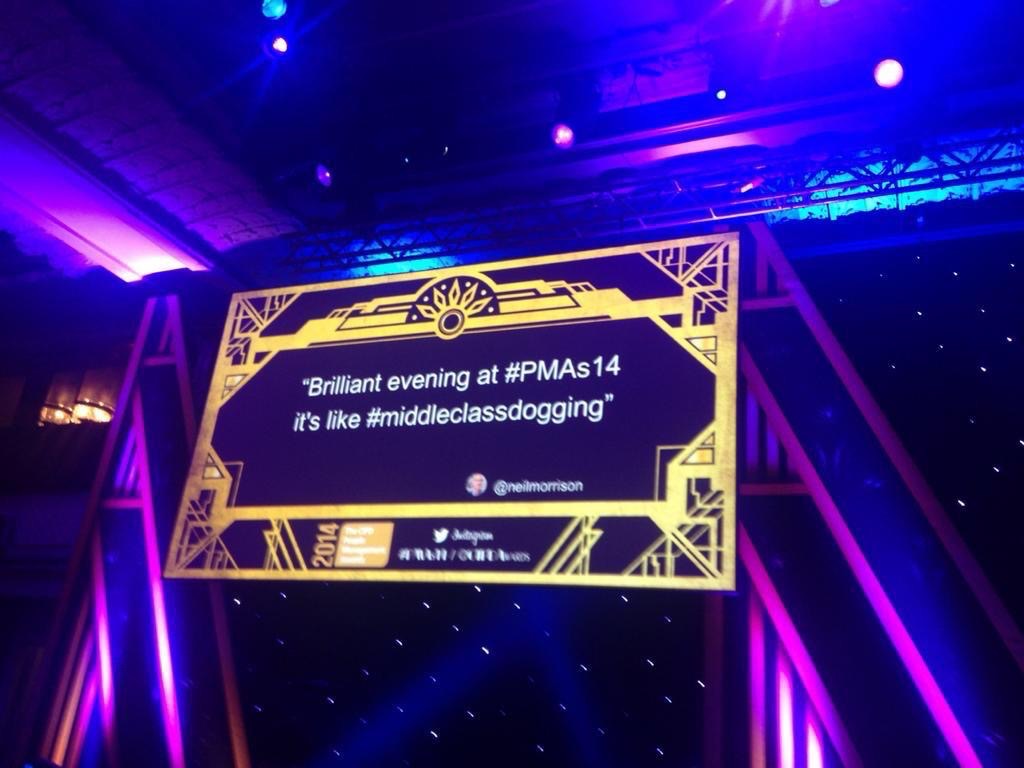
I can only apologise.

If not now, then when?

People will have a range of views on the HR profession, I’m ok with that. It may not surprise you to know that I don’t come to work to either fulfil or disprove a myriad of perceptions of my worth or usefulness.  It may surprise people to know that the reason I do come to work is to steer the organisation that employs me at the time to do the right thing for the people it employs.

Obviously if you take this to the macro level, profitable organisations can invest back in the workforce, successful organisations ensure they have capital investment, commercial organisations ensure they can see and instigate the opportunities that lead to success and profitability – and so the cycle continues.

But that’s not the reason I get out of bed in the morning, the reason I do is to try to create the place to work that my colleagues want to be in. Even if that will inevitably involve some bitching and moaning along the way – you can’t please all the people all of the time…

Over the last couple of weeks I’ve seen a rise in calls for “HR to step forward”, or how strong HR is needed more than ever. The clarion call of a crisis, once again being used to throw the profession into the light. Remember 2007?

Whilst it starts with obvious decisions about furloughing, protection of wages, short term working, redundancies, protection of health, safety and wellbeing, managing remote workers and resource and contingency planning. It extends to issues such as executive reward, dividends, culture, engagement and productivity and post crisis recovery. There is no doubt that there is a lot for us to navigate.

The cynic in me wants to ask why it requires a global pandemic for the profession to find some backbone and step into the role that it should be playing every day? Why it requires something of such magnitude to bring a focus on the contribution that we make? But I guess beggars can’t be choosers, and as a collective we have been beggars for far too long.

We have seen and will continue to see some shocking examples of bad HR practice through this event, we need to hold these organisations and decision makers to account. But if we genuinely want to learn and grow from this, we also need to celebrate those organisations that are doing the right thing, protecting their employees and stepping up and into the right leadership space.

Because frankly, if not now then when?

HR: A 10 point agenda for change

If you ever wanted proof of how dismally most people view the HR profession, then you need go no further than this piece from the Guardian online on Friday. What started as a question about working hours, turned in to a free for all regarding the standing of the HR profession. And by far the majority of comments were negative. Here are just some examples,

“…in my company, it’s often the victims of HR that have to stay late to fill in even more paper work, to generate the paperwork that HR needs to dispel the rumor that they have nothing to do all day but generate pointless paper work.”

“Everyone else in your building hates HR for the ludicrous and pointless self-assessments we’re put through each year.

“HR is the weak link in every company; an industry whose only purpose is to justify its own pointless existence. 

Get out while you still can, or face an entire career of being sniggered at behind your back by your co-workers.”

“We all hate our HR department, they send out pointless memos about equality and diversity, and reminders to complete your appraisal/quarterly review etc, just so it looks like their jobs are essential.”

“People in HR departments exist to preserve their pointless jobs by creating work for others to do !
Does anyone know anything worthwhile that HR has done ?”

“my experiences with Human Resources were neither humane nor resourceable. [sic]”

I could go on, but you get the gist. Everybody hates HR.

Now I could put up a stream of arguments that would point out the value of HR, indeed I and a few others did tentatively point this out, but in reality that is an utter waste of time and completely misses the point. It doesn’t matter what WE think, it matters what THEY think and if we are serious about our profession, then we need to take that in to account.

I admit that, in common with a number of other functions, we are in a situation where people don’t understand the value until they really need it and we are often associated with “bad things” that happen in companies. But that is the fact of the matter, we can’t get away from that. We cannot deny reality, we need to tackle it face on.

  1. We need to be resourceful in bringing the right mindset into the profession. We are not a policing function, we are not an administrative function, we are here to provide solutions and facilitate not provide problems and barriers. This mindset is more important that technical skills. If people don’t have it then don’t hire them.
  2. We need to de-clutter our processes and procedures. Enough of the forms, the polices, the bureaucracy. 90% of it isn’t needed and 100% of it is hated, resented and not understood by employees and managers alike.
  3. We need to stop saying “no”. Our language, our communication to the business needs to be positive, not negative. We need to be owners of good news. Deal with problems individually, not by memo. Stop sending out dumb emails, if it isn’t positive, don’t send it.
  4. We need to accept that you don’t get influence through control, you get influence through other people’s positive experience of you. Get influence through people wanting you involved not by telling them you have to be.
  5. We need to cut down the initiatives. Every time we look at something we should clearly be able to articulate why we are doing it and why our organization (not our HR department) wants it. If we can’t, we shouldn’t be doing it.
  6. We need to listen to our employees and our managers. We need to stop seeing them as being “the problem” and start seeing them as being the people that we are here to help. They are the reason we have jobs, so stop moaning about them and start listening.
  7. We need to stop focusing on alleged best practice and start focusing on “best fit” solutions. If our organizations only need a simple solution, then just give it to them. This isn’t about winning prizes at the CIPD awards, or standing up at conferences, this is about making your organization better.
  8. We need to be more human. We need to get out and talk, interact, spend time with people, we need to be empathetic and understanding, we need to feel. Sitting in the HR department bitching is not going to change anything.
  9. We need to stop focusing on cost and start focusing on value. These two things are not the same. Even if cost reduction is on the agenda, look at the value you can get from the budget, the resources. Cheaper and faster do not equate to better.
  10. We need to tell people who do not believe in this agenda that they have no place in the profession. They should find another career voluntarily or we should help them to find one involuntarily. There isn’t a choice to stay the same, there is only the choice to change.

Every single one of us has a responsibility for raising standards and calling others to account when they do not meet high enough standards. Those of us in leadership positions need to set the example. We need to be all over and we need to start now.

This is a repost of the original, which was posted in January 2013. I’m not sure how much has changed in the six years since I wrote it.

A blueprint for HR

I’ve been in the world of people management long enough to know that our profession is not without criticism. Many of the challenges we face are of our own making as we flit between almost schizophrenic versions of our own identity, causing confusion and bafflement to the people that we serve – our employees. Which is why, when you see something that genuinely has the opportunity to move the profession forward, it fills me with hope and excitement.

It would be surprising to hear such excitement come in a package, describes as, “The new Profession Map” (yes, I’m confused by the capitalisation too, but let’s just park that for now), but this has the potential to really transform our profession. Launched by CIPD last week, the product of thousands of conversations with practitioners, businesses and teams the map for the first time, articulates the profession that I know and believe in.

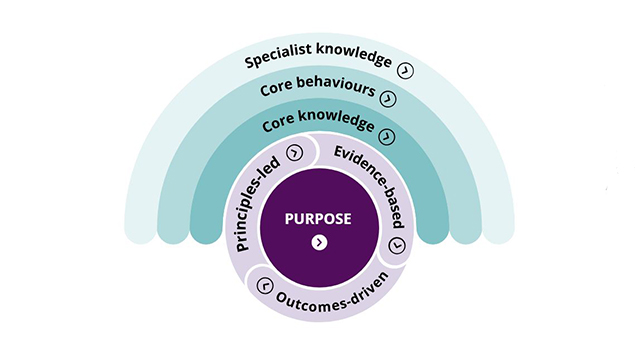
profession-map-window

At the heart is the core purpose, “…to champion better work and working lives. Creating roles, opportunities, organisations and working environments that help get the best out of people, delivering great organisational outcomes, in turn driving our economies, and making good, fair and inclusive work a societal outcome.” I could have written that myself.

And to do this well, we need to be led by principles, ensuring ethical practice where people and professionalism matter. We need to based our decisions and initiatives on evidence, not fads and whims and to be focussed on the outcomes of our work for our people, for our profession and for society at large.

For once, I read a set of core behaviours that matter to me – “valuing people”, “situational decision-making” and “ethical practice” to call out a few and an articulation of core knowledge that I see in truly great practitioners, understanding “culture and behaviours”, being able to demonstrate “analytics and creating value” and “business acumen” rather than simple statements of commerciality.

Of course, the success of “The new Profession Map” will be dependent on the adoption by practitioners not just in the UK, but across the globe. I know my team have already started looking at how we can incorporate this into our organisation. And that’s why I absolutely implore you to do the same, to help us come together and build a profession that is fit for the now and the future.

It is easy to be cynical and to criticise, but I find it genuinely hard to understand how anyone could not find this both useful and productive for the profession. Now if we could just deal with those capital letters, it would be absolutely perfect.