Thirty years of HR-t

A letter came through the door last week with a certificate from the CIPD marking 30 years since I first joined. Alongside inclusion in the HR’s Most Influential Hall of Fame, this was clear proof that I’m now old…a “veteran” as I’ve been described. Ouch.

Over the 30 years, I’ve never once hesitated paying my membership fees, because I value the work that the CIPD does. I know that might sound strange to some people who would expect me to criticise them (more of that later) but I genuinely believe they do an important job in a difficult context where it is hard to please everyone and sometimes even anyone. Like any long standing relationship, you have ups and downs. You tolerate things that used to irritate you and you get irritated by things you used to tolerate. But good relationships are based on honesty, constructive challenge and always wanting the other party to be better for themselves, not for you.

So let’s start with the good stuff. When I qualified the IPD had just been formed through the combination of the Institute of Personnel Management and the Institute of Training and Development. I became a GradIPD and I was genuinely proud, even more so in 2003 when that became the CIPD. Professional standards are important, particularly in a profession without the mainstream understanding of the law or accountancy for example. To this day, we put people through their CIPD qualifications in my organisation and it matters to them like it did to me. That chartered membership is a standard that should be championed and cherished in making the profession known and widely recognised.

Whilst the CIPD is at its best when it is championing high standards, it is at its worst when it starts to stray into social policy. The partnership with the High Pay Centre to champion “Fat Cat Monday” was frankly bonkers given the, at the time, very outspoken leadership of the HPC and something that anyone with half a brain should have understood placed its members in untenable positions with their remuneration committees. They’ve got themselves in a high profile mess over trans rights too, and their bias towards knowledge workers rather than the front line blue collar workers stems from a like of social, economic and intellectual diversity in their ranks. They have super bright people in the organisation, but I sometimes wonder whether there is a bit too much group think and a bit too little sense of strategic direction.

Over those thirty years we’ve had some fun too. Who can forget the imbecilic “Think HR, Think Again” marketing campaign. There was more “thought” in the strap line than there was in the conception of the ridiculous short lived campaign. There was the time in the early days of social media where they struggled a to get to grips with hashtags being used to drive feeds, leaving a few of us to swamp their website with irrelevant humorous content and being eventually given a stern dressing down by their social media team. And of course, the pièce de résistance when I managed to put a rather inappropriate message on the large screens at the 2014 People Management Awards (image below).

So 30 years in, CIPD it has been a blast. Keep championing better work, keep making people proud to qualify, remember our job is to drive the productivity of individuals, teams and organisations and not to tell people how to think or what to believe. And please, for the love of Buddha, don’t do another marketing campaign like that one. Here’s to…well not another 30 years, but who knows…maybe another 10.
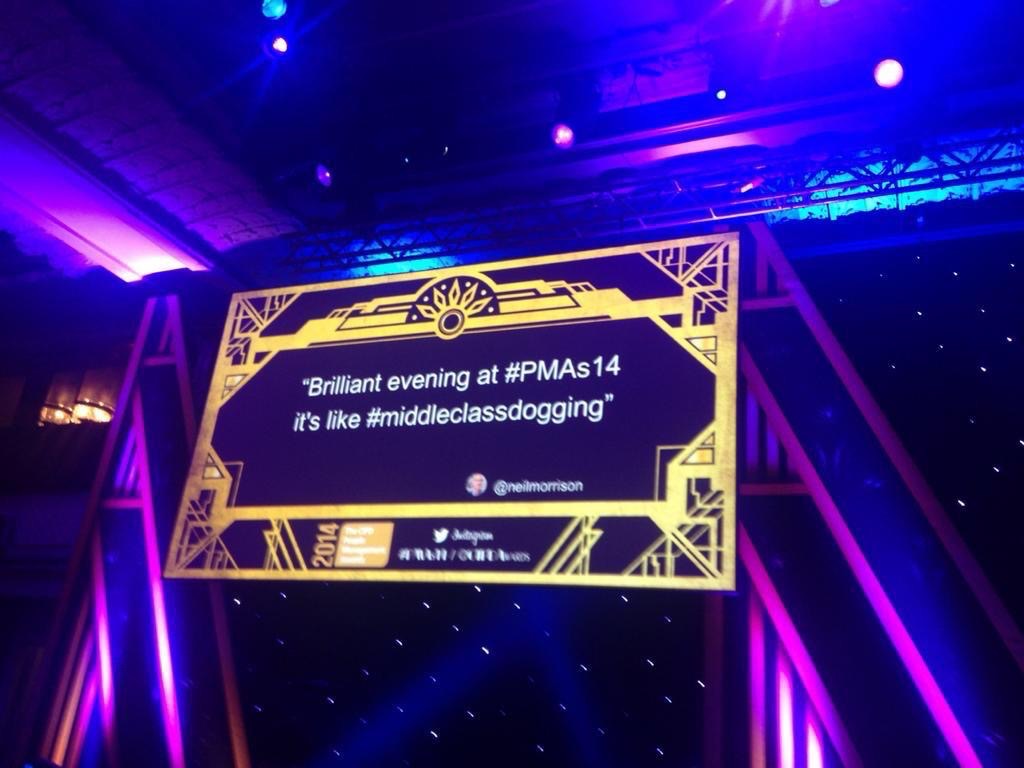
I can only apologise.

Cards on the table, this means more

A number of years ago I was helping an organisation through a significant change, the sort that goes from top to bottom. The leadership team thought through and worried about all of the changes that we made, how they’d be received and how we explained them. In everything that we went through, from changes in structures, commercial terms and locations, the most emotive topic was a change to the structure of email addresses – it caught us out. That’s just the way it goes.

If you’re in HR in the UK, you’ll be aware of the most emotive debate since Marks and Spencer made Percy Pigs vegan friendly and in the process removed all joy from eating one. I’m talking about the CIPD’s change to the membership card.

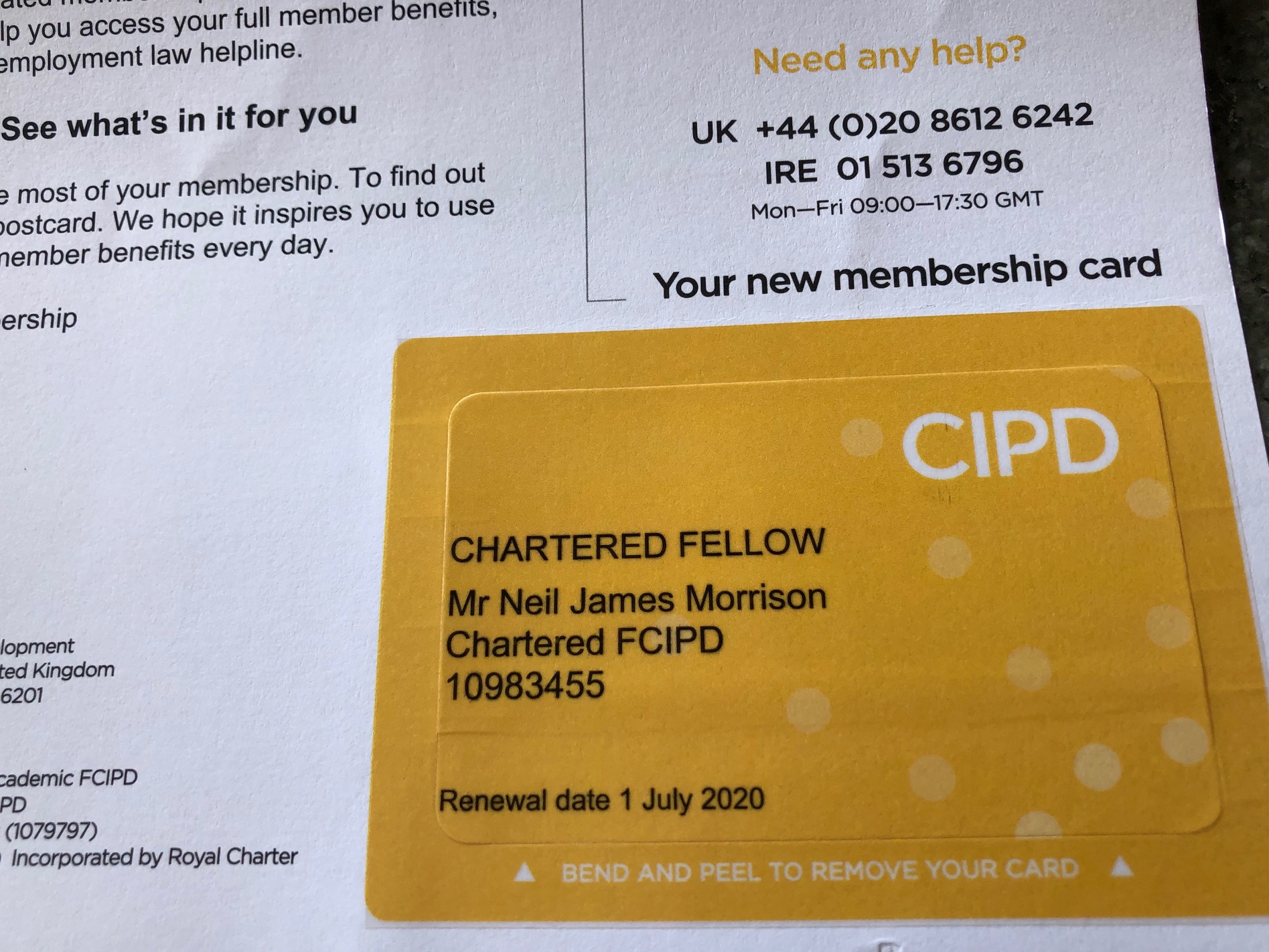
Since I qualified nearly twenty five years ago, I’ve received a traditional membership card each year in return for my membership fee. This year, like everyone else, I received a badly typeset, plasticised piece of paper.

IMG_1274.jpg

(now you know my middle name and my membership number…no impersonations please!)

The reaction to the change has been typically HR, over emotional and intellectually stunted, with an artificial outcry and rage. And in a balanced response Membership Director David D’Souza wrote this post on the CIPD website, whilst others on the same side of the argument say, “it’s just a card!”.

Which is of course true, but misses the point.

The CIPD have shot themselves in the foot with a decision that is naive and ill-thought through, even if it is in it’s essence correct. It is only a card, but for many it represents their membership. I have several other memberships to organisations that send a similar card (The Ramblers Association for example), the difference is that I decide on an annual basis whether to continue with my subscription and I don’t have to pass an assessment process or exam in order to get it.

For many, I imagine, this is seen as a representation of the value proposition of their membership. Indeed the card itself came in a big yellow envelope with the word, “VALUED” in big capital letters, dreamt up by someone who once read a Ladybird book on marketing, to make sure that members understand – they’re valued. The thing is, it doesn’t matter what you say, it matters how you feel, and in the same way that the email address caused disproportionate debate, this change has also led to a different conversation.

If the CIPD wants people to commit to membership for life, then a flimsy, disposable card (that I’m told rips on removal) doesn’t represent the messages that they’d intend. If they want people to see the institute as the, “internationally recognised gold standard for HR and people development”, then this feels symbolic of saying one thing and acting in a different way. If there is an opportunity for the institute to draw heart, it is that people clearly felt proud of receiving their previous card, even if they weren’t quick to declare it.

The environmental arguments that are put forward for the change don’t wash with me, I’m afraid. There are membership models out there that issue one card on joining and then only change it on upgrading or loss. With a bit of creativity, they could have launched a couple of different permanent cards each associated with a different management or workplace thinker for example. If you genuinely expect members to stay with you for life, then one card over a thirty or forty year career would be much more environmentally friendly than a plasticised paper one each year.

Let’s be clear, I don’t care about the card either way, reading about the debate made me go and find the lurid yellow envelope in a pile of catalogues and junk mail that I’d put to one side. What worries me more is that this seems to be the latest piece of evidence of the CIPD losing sight of the value proposition for their core membership. There are many organisations that have forgotten their core customer base as they’ve become distracted by peripheral activities and chasing revenue. Let’s hope the sensible and grounded voices at the institute can use this example as a warning sign to remind others of the risk of this happening to them.

A blueprint for HR

I’ve been in the world of people management long enough to know that our profession is not without criticism. Many of the challenges we face are of our own making as we flit between almost schizophrenic versions of our own identity, causing confusion and bafflement to the people that we serve – our employees. Which is why, when you see something that genuinely has the opportunity to move the profession forward, it fills me with hope and excitement.

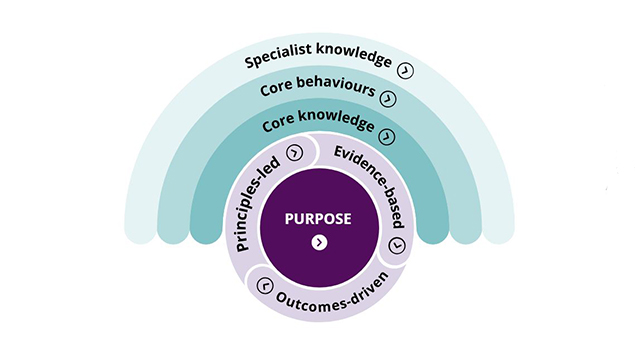
It would be surprising to hear such excitement come in a package, describes as, “The new Profession Map” (yes, I’m confused by the capitalisation too, but let’s just park that for now), but this has the potential to really transform our profession. Launched by CIPD last week, the product of thousands of conversations with practitioners, businesses and teams the map for the first time, articulates the profession that I know and believe in.

profession-map-window

At the heart is the core purpose, “…to champion better work and working lives. Creating roles, opportunities, organisations and working environments that help get the best out of people, delivering great organisational outcomes, in turn driving our economies, and making good, fair and inclusive work a societal outcome.” I could have written that myself.

And to do this well, we need to be led by principles, ensuring ethical practice where people and professionalism matter. We need to based our decisions and initiatives on evidence, not fads and whims and to be focussed on the outcomes of our work for our people, for our profession and for society at large.

For once, I read a set of core behaviours that matter to me – “valuing people”, “situational decision-making” and “ethical practice” to call out a few and an articulation of core knowledge that I see in truly great practitioners, understanding “culture and behaviours”, being able to demonstrate “analytics and creating value” and “business acumen” rather than simple statements of commerciality.

Of course, the success of “The new Profession Map” will be dependent on the adoption by practitioners not just in the UK, but across the globe. I know my team have already started looking at how we can incorporate this into our organisation. And that’s why I absolutely implore you to do the same, to help us come together and build a profession that is fit for the now and the future.

It is easy to be cynical and to criticise, but I find it genuinely hard to understand how anyone could not find this both useful and productive for the profession. Now if we could just deal with those capital letters, it would be absolutely perfect.

Are you ready for the end?

I’m not the sharpest tool in the box. I’m ok with that. The reality finally struck me that in a matter of weeks our world might be on the verge of substantial change. There is a very real chance that we could be collectively making the decision to leave the european union.

It doesn’t matter what I think, or what you think, the implications will be ours to deal with – both good and bad. In many ways, it is hard to think of a profession or an industry that will be more directly involved in unpicking the implications of that decision than the HR profession.

Nothing will happen too quickly, we won’t wake up and be faced with a series of challenges – other than uncertainty – but we would need to start thinking through the type of employment framework that we believe is right for the country and how we want our world of work to be designed.

Those for an exit will tell you that it will give unrivalled freedom to do what we want. Those against will tell you that nothing much will actually change. The reality is probably somewhere in the middle, away from the rhetoric and fear mongering.

But we do need to think through the type of economy we want and how we would go about building the arguments for creating it. The arguments of freedom come with the significant risks of exploitation and loose practice. Yet what is clear is that the “one size fits all” approach of central legislation does not fit the difference in the economic models of the UK and other countries.

What would you keep, what would you change? Have you thought it through?

Our entire landscape would be subject to debate and consideration. From immigration and skills, through discrimination, compensation and employment protection and litigation. We would be at the centre of some of the most contentious discussions and debates and we need to understand and find our voice.

Many think it will happen, I’m clear it could happen. In the event that it does, the HR profession will have a responsibility to lead business, to make its collective voice heard and to stand for something. We will have an opportunity to shape. And if we fail to take it, rest assured someone else sure as hell will.